

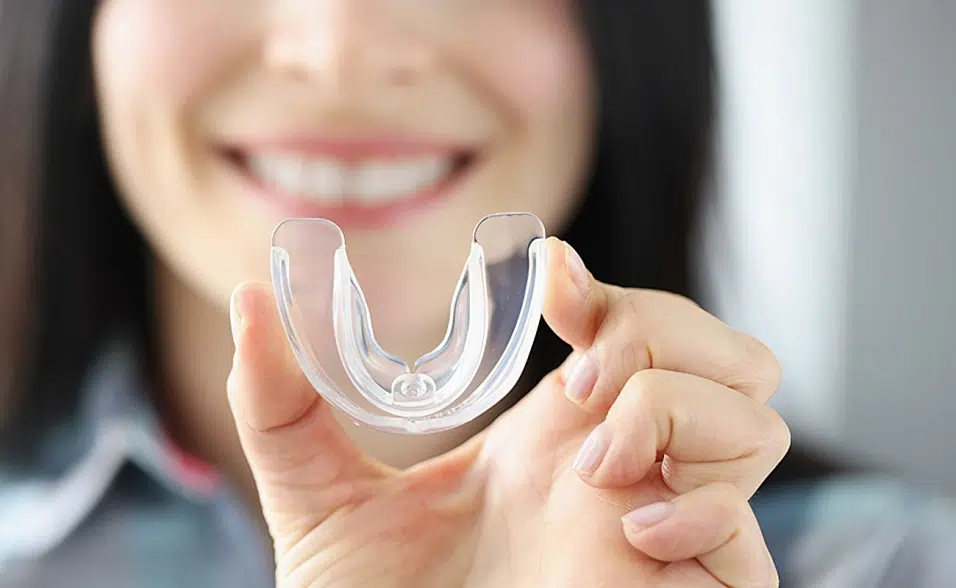
What is a nightguard?
Nightguards, also referred to as dental guards or mouth guards, are utilized to prevent the adverse consequences of teeth grinding. Typically composed of a durable substance called acrylic resin, they can be either soft or hard. Your dentist will advise wearing the nightguard on the upper front teeth during sleep to prevent contact with the lower front teeth.
In instances of intense teeth grinding, a dental guard for the lower teeth may be recommended. Mouthguards not only safeguard the teeth but also offer cushioning for the jaw muscles.
Night guards are beneficial for individuals with bruxism
Bruxism, the act of grinding teeth, can occur both during waking hours and while asleep. It is often a result of anger, stress, or anxiety and is typically done unconsciously. However, this habit can have negative effects on oral health. Dentists may recommend the use of a nightguard in conjunction with anxiety treatments such as medication or therapy to safeguard your teeth.
While night guards do not completely eliminate teeth grinding, they can help prevent damage to fillings, tooth chipping or loosening, and excessive wear of tooth enamel. Additionally, using a nightguard may improve the quality of sleep and alleviate symptoms associated with bruxism.
Be aware of these typical signs: tooth sensitivity, cheek biting, receding gums, fatigue due to sleep disturbances, facial discomfort caused by tense jaw muscles, and headaches in the temple region.
Nightguards for TMJ provide numerous advantages
The TMJ, also known as the temporomandibular joints, are essential for the movement of your mouth. However, teeth grinding can lead to issues with these joints, resulting in TMJ and various symptoms like jaw pain, clicking or popping sounds, and a locked jaw. TMJ can also be caused by inflammation or jaw injuries. Fortunately, using nightguards for TMJ while you sleep can help align your jaws properly and reduce muscle tension. By using a nightguard, you may also find relief from other TMJ symptoms, including:
- Facial pain or discomfort
- Neck and shoulder pain
- Intense discomfort similar to an earache
- Sensation of hearing a ringing sound in the ear
- Challenges with chewing or speaking
- Discomfort while eating or talking